
The 30-Day Post-Breakup Social Media Detox (2026): The No-Contact Upgrade That Actually Works
The 30-Day Post-Breakup Social Media Detox (2026): The No-Contact Upgrade That Actually Works
Breakups didn’t get “harder” in 2026 because people got weaker.
They got harder because your ex now lives in your pocket—with algorithmic reminders, story views, “On This Day” memories, mutuals’ likes, and the casual dopamine hit of checking “just once.”
Meanwhile, a broader social media pullback is trending in the U.S. heading into 2026 (more people cutting time or quitting entirely), which matters because the best breakup recovery plans now include a digital component—not as a vibe, but as stimulus control. (globenewswire.com)
This article is the DateWise version of that plan: direct, field-tested, anti-game, and built for men who want their focus back—without turning healing into a performance.
The trend in 2026: “Quit-checking” your ex (and stop letting apps farm your pain)
The most consistent modern breakup trap isn’t texting your ex.
It’s monitoring them.
Research over the last decade consistently links ex-partner surveillance (checking their profiles, stories, posts, likes) with worse recovery—more distress, more longing, less growth. (amp.dw.com)
And it’s not subtle in real life:
- You feel “fine” → you see a story → your nervous system spikes
- You stop reaching out → you see them get attention → you spiral into status-comparison
- You try to date again → you keep an emotional tab open on the past
DateWise’s breakup content already hits the core: clean end point, boundaries, stabilize the body, rebuild routines. (datewisetoday.com)
The 2026 update is this:
Your recovery is only as strong as your digital perimeter.
The psychology: why “just checking” keeps you stuck
After a breakup, your brain is running a loop: Where did safety go? What does this mean about me? Can I fix it?
Social media checking fuels three mechanisms:
-
Intermittent reinforcement
Sometimes you see nothing. Sometimes you see something that wrecks you. That unpredictable reward/punishment pattern is sticky (same reason slots are sticky). -
Rumination triggers
The content isn’t “information.” It’s a cue that reactivates the bond and kicks off mental replay. -
Self-concept disruption
Breakups hit identity. Studies on post-breakup adjustment point to factors like self-concept clarity and resilience as part of healthier recovery—checking keeps your identity outsourced to their feed. (journals.sagepub.com)
This is why “be busy” fails. You can be busy and still get ambushed by one photo at 11:47 p.m.
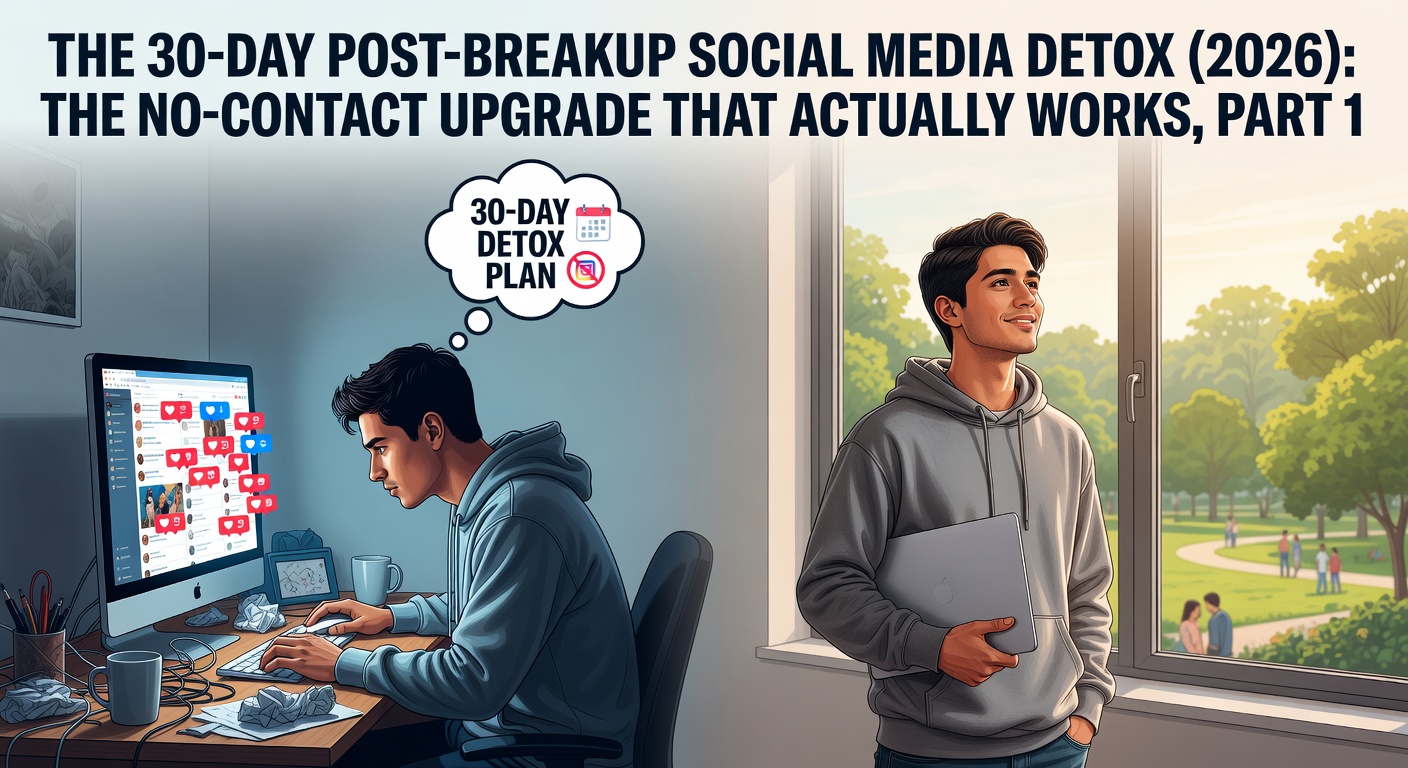
The DateWise rule: no-contact isn’t a moral stance—it’s stimulus control
Some internet breakup advice turns no-contact into a manipulation tactic (“to get her back”).
DateWise doesn’t do that.
In practice, no-contact is about protecting your nervous system long enough to think clearly again—especially after situationships, hot/cold dynamics, or anything that trained you to chase. (datewisetoday.com)
In 2026, no-contact without a social media plan is like “quitting alcohol” while working night shifts at a bar.
So here’s the upgrade.
The 30-day Social Media Detox Plan (built for men who still have to function)
Your objective for the next 30 days
Not “heal forever.” Not “be unbothered.”
Your job is simpler:
- Reduce exposure
- Reduce checking
- Reduce triggers
- Rebuild structure
If you do that, the emotions settle enough for the deeper work (meaning-making, pattern change, dating readiness).
Step 1 (Day 0): Lock down the digital perimeter in 15 minutes
Do this once. Do it clean.
Minimum effective actions
- Mute or unfollow their accounts (and close friends list if applicable)
- Remove them from your story viewers loop (stop posting for their reaction)
- Archive your chat thread (or delete it if you keep rereading)
- Turn off “memories” / “On This Day” style resurfacing where you can (platform-dependent)
If you cannot stop checking with mute/unfollow, you’re not weak—you’re dealing with compulsion. Then you escalate:
Escalation (if you keep relapsing)
- Block (temporary is fine)
- Remove mutuals who act as “update pipelines”
- Log out on your phone (keep access only on desktop, if needed)
Blocking is not “dramatic.” It’s a boundary. And in 2026, more people are explicitly treating breakup recovery as a reason to cut platform exposure. (amp.dw.com)
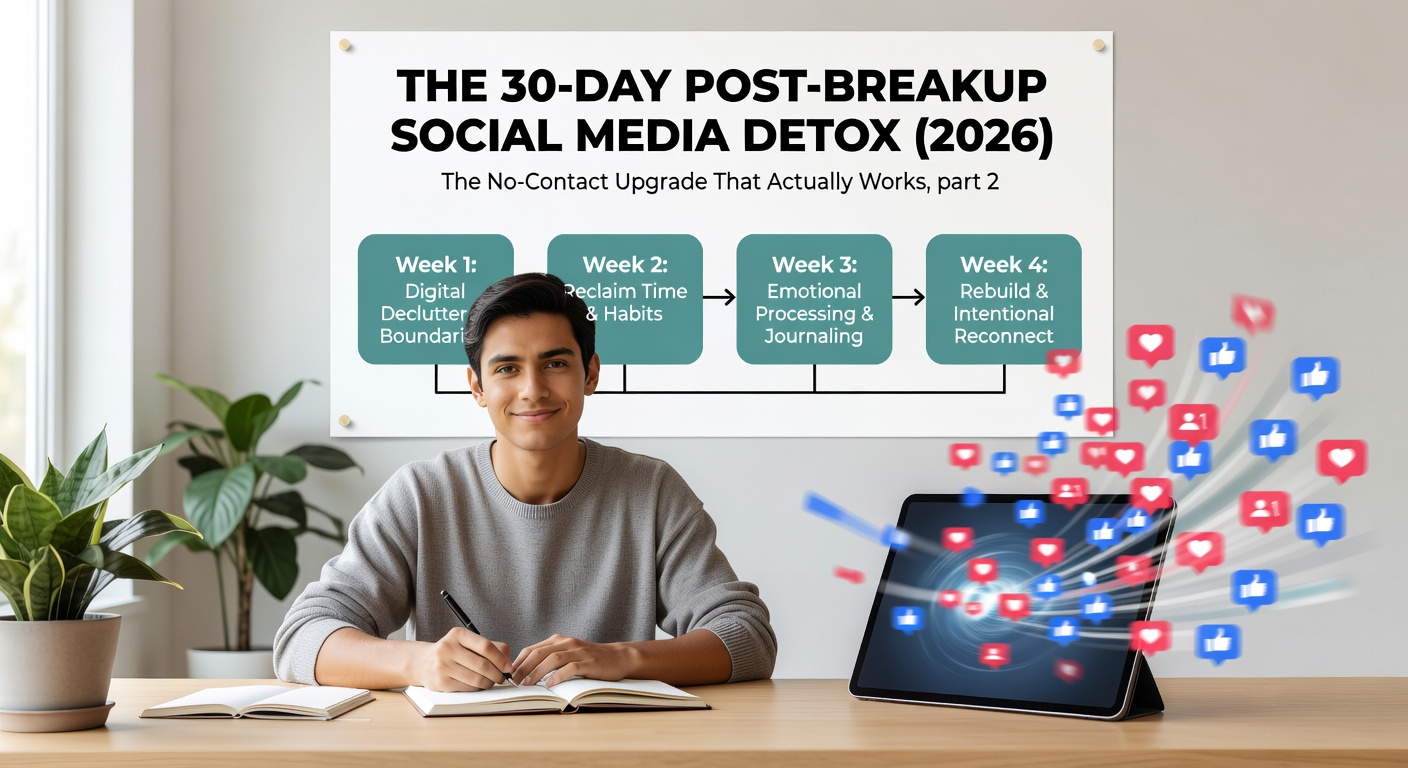
Step 2 (Days 1–7): Replace the checking habit with a scripted response
You don’t stop a habit by “having willpower.”
You stop it by replacing the sequence.
Common trigger → old response → new response
Use this script:
- Name it: “This is an urge, not a command.”
- Delay 10 minutes: no bargaining
- Do one physical action:
- 20 pushups, or
- walk around the block, or
- shower + water
Create a “no-text / no-check” alternative list
Put this in Notes. Keep it short.
- Text a friend: “I’m having an urge to check. Talk me out of it.”
- Journal: “What am I hoping to feel if I check?”
- Read your breakup “why list” (the pattern, not the drama)
DateWise principle: don’t negotiate away your dignity in the first week—especially via late-night emotional essays or social media signaling. (datewisetoday.com)
Step 3 (Days 8–14): Build a routine that calms your body first
If you’re sleeping 5 hours, eating trash, and doomscrolling at night, your “mindset” work won’t land.
Treat this like performance recovery:
- Sleep window: consistent bedtime/wake time (even if sleep quality is poor)
- Movement: 30 minutes daily (walk counts)
- Protein + water early (stabilizes appetite swings)
- Alcohol cap: if it increases rumination, it’s not helping
This is straight DateWise: stabilize your body to stabilize your mind. (datewisetoday.com)
Step 4 (Days 15–21): Stop “public grieving” and stop “public proving”
Two common male post-breakup mistakes:
-
The performance glow-up
Gym selfies, nightlife stories, thirst traps—done to provoke a reaction. -
The public sadness post
Cryptic quotes, “growth” captions, passive-aggressive memes.
Both keep you externally oriented—still playing the relationship on a different stage.
The rule for 30 days
- Post normally, or don’t post.
- No subtext. No signals. No bait.
If you need to process, do it privately: friends, journaling, therapy.
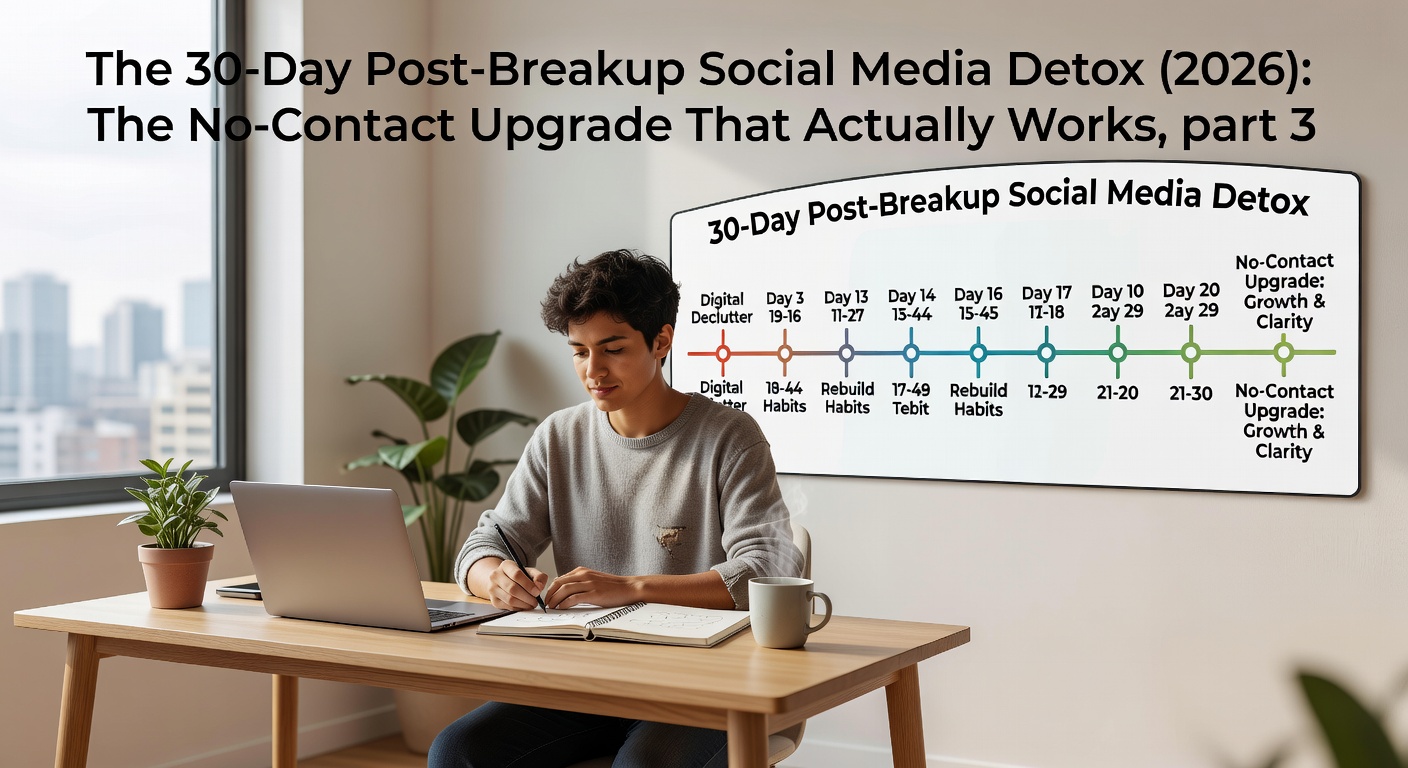
Step 5 (Days 22–30): Re-enter dating without using it as anesthesia
A lot of men “move on” by swiping like it’s morphine.
DateWise framing: don’t try to win the breakup—heal from it. (datewisetoday.com)
Green lights you’re ready to date again
- You can go 24–48 hours without thinking about her intensely
- You aren’t checking her socials (or mutuals’ socials) for updates
- You can tell the story without spiraling into blame or self-hate
- You want connection, not validation
Red lights (delay dating 2–4 weeks)
- You’re trying to replace her, not meet someone
- You’re secretly hoping she sees you “back out there”
- Every date becomes a comparison
“Mute vs block” in 2026: what I recommend (practical, not ideological)
Here’s the decision rule that works:
- If you check once a day or less and can stop: mute/unfollow
- If you check multiple times a day, especially at night: block (temporary)
- If you’re dealing with harassment, threats, stalking: block + document + get support
No-contact is not about being “cold.” It’s about reducing inputs that keep your nervous system activated.
Conclusion: the point of detox isn’t purity—it’s momentum
The best breakup advice for men in 2026 isn’t “be positive.”
It’s: stop feeding the wound.
A 30-day social media detox won’t erase grief. But it will remove the biggest accelerant: constant algorithmic contact with the person you’re trying to detach from.
Do the boring things for 30 days:
- Lock down the digital perimeter
- Replace checking with a script
- Stabilize sleep, food, movement
- Stop posting for a reaction
- Date again only when it’s curiosity—not anesthesia
That’s how you stop “moving on” from being a motivational poster and turn it into what DateWise is built for: real results, measured in behavior—then mood.