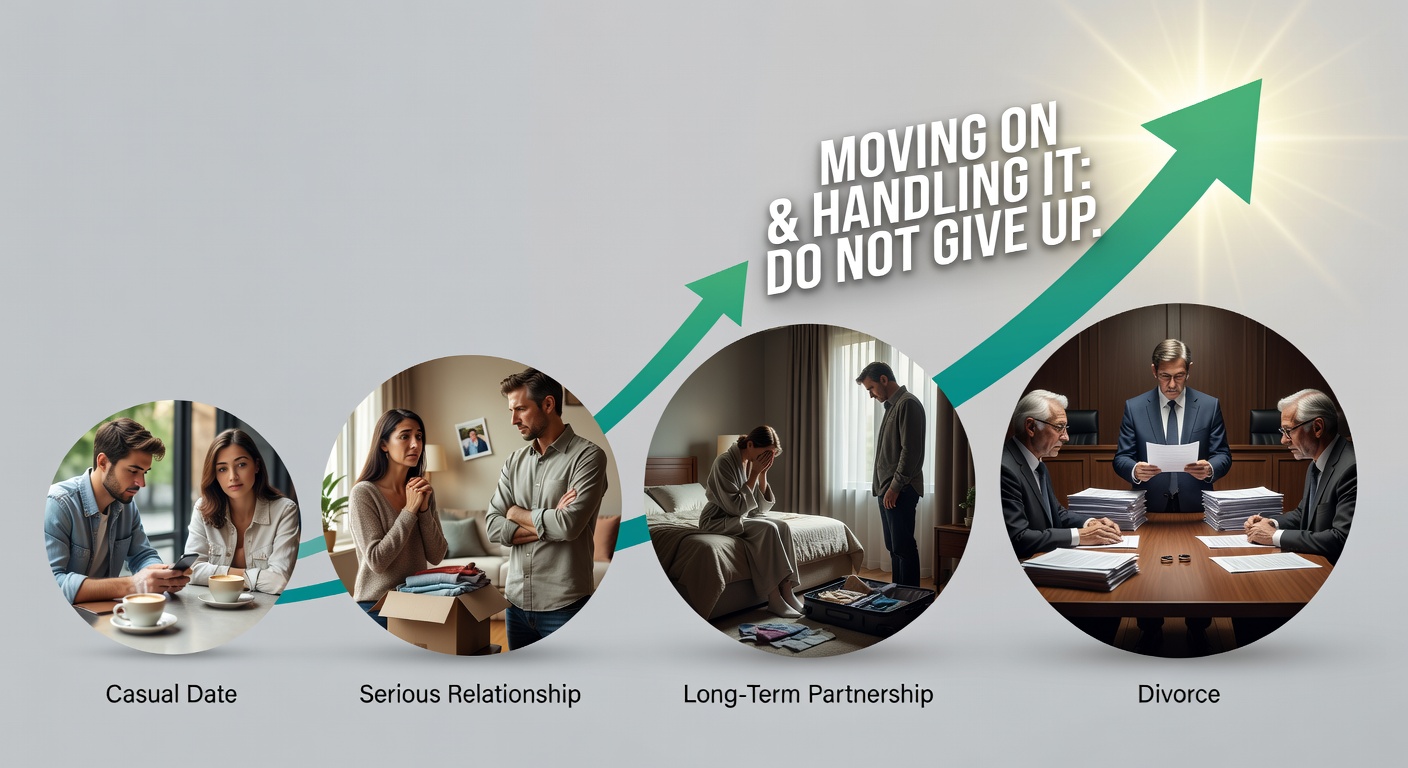
Managing a Breakup in Any Relationship: From Casual Dating to Divorce (and How Not to Give Up)
Managing a Breakup in Any Relationship: From Casual Dating to Divorce (and How Not to Give Up)
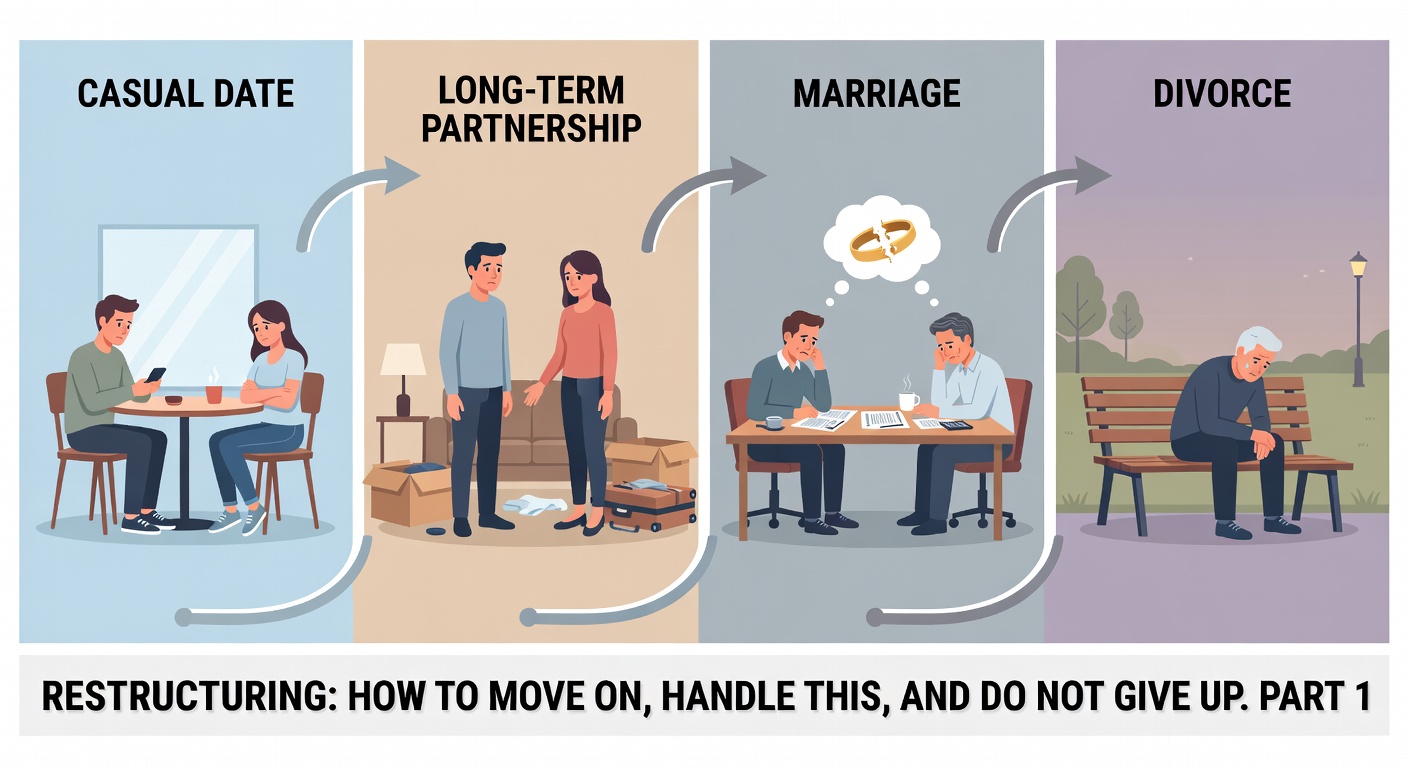
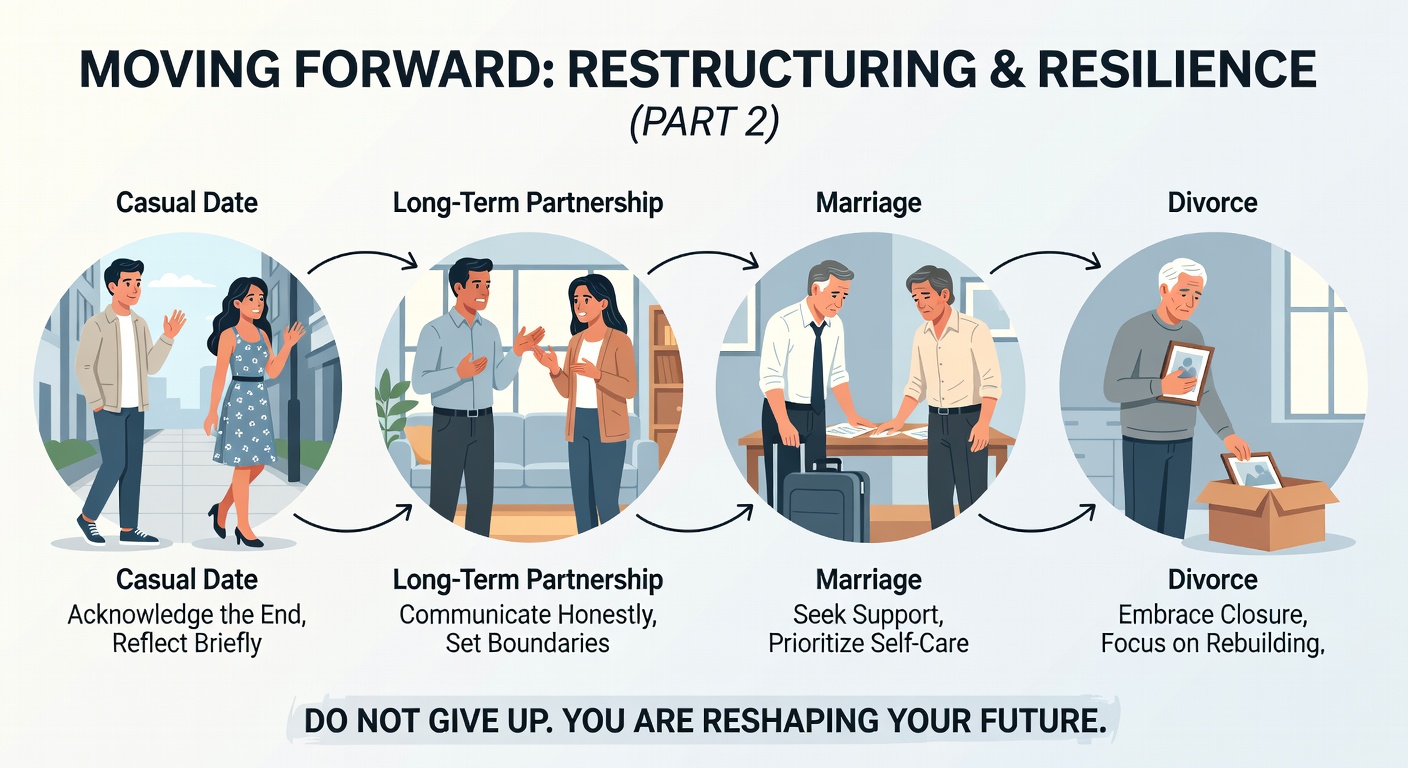
Breakups hurt—whether you went on five dates, shared a home for five years, or built a marriage over decades. The details change, but the core challenge stays the same: you’re grieving the loss of a relationship and the future you imagined. This article breaks down how to handle a breakup across different relationship types, with practical steps for ending things respectfully, protecting your mental health, and moving forward without giving up on yourself.
The Breakup “Basics” That Apply to Every Relationship
No matter the label, a breakup tends to trigger a mix of grief, rejection, anxiety, and identity disruption (“Who am I without this?”). Before focusing on the type of relationship, build a foundation.
1) Accept that your feelings can be messy and contradictory
You can feel relief and sadness at the same time. You can miss someone even if they were wrong for you. This doesn’t mean you made a mistake—it means you’re human.
- Expect emotional waves: calm, then a sudden hit of longing.
- Don’t treat a bad day as “proof” you’re failing.
2) Create a clean “end point” where possible
A breakup that stays vague (“Maybe later…”) can trap you in limbo. Even if you remain in contact (co-parenting, shared finances), aim for a clear emotional boundary: the relationship is over.
3) Don’t negotiate away your dignity
After a breakup, people often bargain: offering to accept less, tolerate more, or shrink themselves to keep the connection. The short-term comfort can lead to long-term self-abandonment.
- If you catch yourself thinking, “If I just become easier, they’ll stay,” pause.
- Replace it with: “I want a relationship where I don’t have to disappear to be loved.”
4) Stabilize your body to stabilize your mind
Heartbreak is not only emotional—it’s physical stress.
- Prioritize sleep, basic nutrition, hydration, and movement.
- Reduce alcohol or substances that intensify rumination.
- Keep your schedule “light but structured”: one or two daily anchors (walk, workout, calling a friend).
1. Do not send that long epistle after they break up with you. I know you want to express yourself, but trust me, they don’t care. Vent to your friends or journal instead.
2. Until you summon the courage to delete their pictures, videos, and number, and mute or block them… https://t.co/Oru1Y5kGju
— HONITEL (@HonitelHQ) April 4, 2026
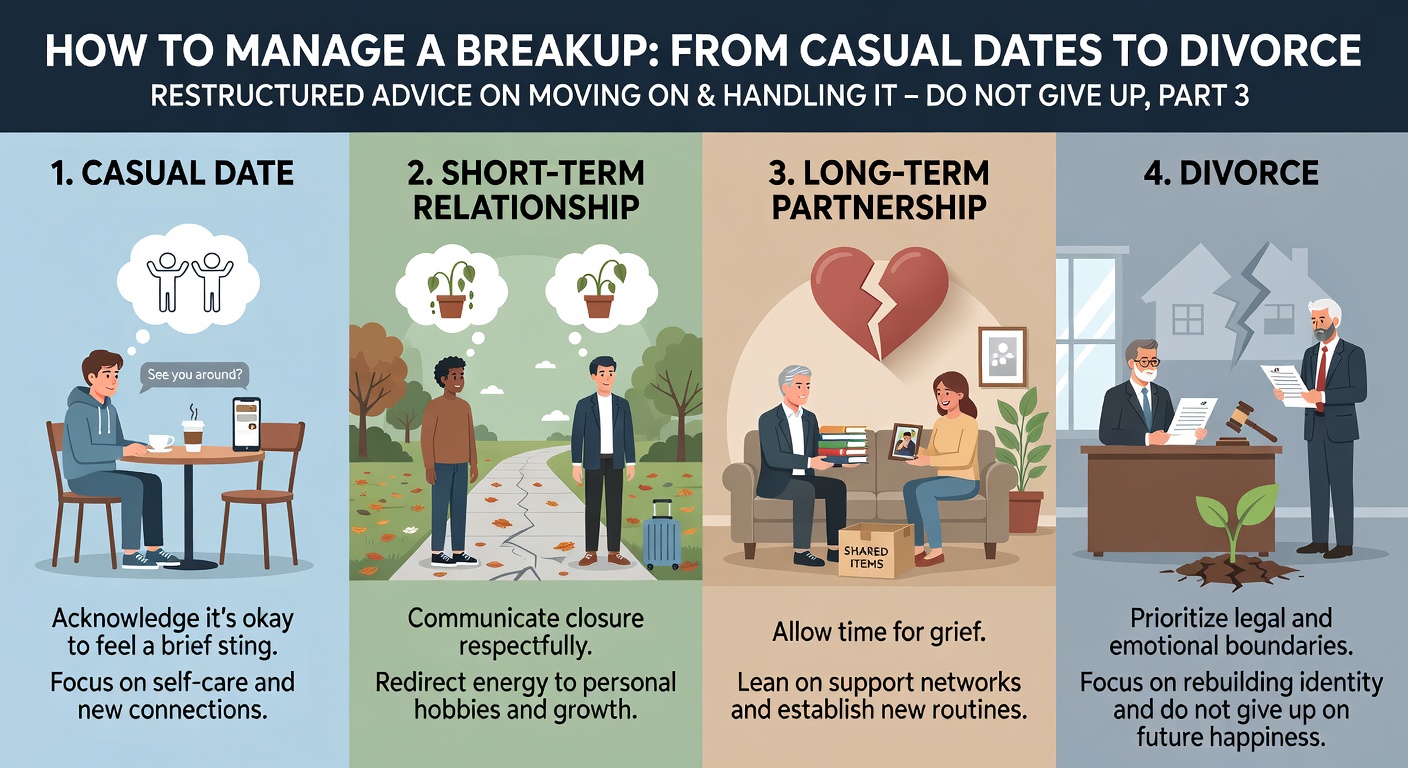
Breaking Up After a Few Dates (Casual Dating)
Casual breakups can feel “small,” but they can still sting—especially if you were hopeful or you rarely connect with people.
How to handle the breakup well
Keep it simple, kind, and direct. In early dating, closure is usually clarity.
- Use one clear message rather than prolonged discussion.
- Avoid detailed critiques of their personality or appearance.
- Don’t ghost unless you feel unsafe.
Example text (direct, respectful):
- “I’ve enjoyed meeting you, but I’m not feeling the connection I’m looking for. I wish you the best.”
How to move on (without minimizing your pain)
Early heartbreak often triggers idealization: you’re grieving potential, not history.
- Write down what you actually know about them vs. what you hoped.
- Remind yourself: chemistry isn’t compatibility.
- Keep dating only if it feels curious—not frantic.
Key terms to remember: clarity, kindness, no over-explaining.
Ending a Situationship or Unlabeled Relationship
Situationships are uniquely painful because the loss includes uncertainty: “Was it real? Did I matter?” Often the hardest part is not just missing the person, but missing the validation.
Step 1: Define what you need (even if it’s late)
If you wanted commitment and they didn’t, the breakup is often about reclaiming your time and self-respect.
- Ask yourself: “If nothing changes, could I live like this for six more months?”
- If the answer is no, treat that as your decision point.
Step 2: Have a boundary conversation
You’re not asking for reassurance; you’re clarifying reality.
- “I’m looking for an exclusive relationship. If that’s not what you want, I’m going to step back.”
Step 3: No-contact (or low-contact) is usually necessary
Because situationships often rely on intermittent reinforcement (hot/cold attention), distance is what breaks the loop.
- Mute/unfollow if you can’t stop checking.
- Remove easy access: archived chats, deleted photos, blocked late-night texting routes.
Key terms to remember: boundaries, self-respect, intermittent reinforcement.
First, accept that it’s over. Not halfway, not “maybe later”—fully. The more you hold onto hope, the longer you stay stuck. Closure doesn’t always come from her; sometimes you have to give it to yourself.
Next, cut unnecessary contact. Constant texting, checking her social…
— IamLizkid (@Iamlizkid1) April 6, 2026
Breaking Up in a Serious Relationship (Months to Years)
When you’ve shared routines, friends, holidays, and long-term plans, the breakup affects your identity and daily life.
The breakup conversation: respectful and firm
Aim for a conversation that is honest without being cruel.
- Use “I” statements: “I’m not able to continue in this relationship.”
- Avoid debating the entire history.
- Don’t bring a “prosecution file” of everything they did wrong unless safety demands it.
If there are recurring patterns (disrespect, mismatched values, emotional unavailability), name the pattern rather than listing every incident.
Logistics: reduce ongoing injury
A serious breakup becomes unbearable when logistics stay chaotic.
- Split belongings with a plan (list + timeline).
- Establish communication rules:
- One channel (text/email)
- Limited time window
- Only logistics, not emotional processing
- Decide what happens with mutual friends:
- Avoid recruiting people to “pick sides.”
- Tell friends a neutral script: “We’re not together anymore; I’m focusing on healing.”
Moving on: rebuild your “daily life scaffolding”
After a serious breakup, your brain expects to reach for them in dozens of micro-moments.
- Replace the habit with alternatives:
- “When I want to text them, I text a friend.”
- “When I feel lonely at night, I walk or shower, then read.”
- Start one new identity-building commitment:
- class, volunteer role, weekly meetup, training plan
Key terms to remember: structure, identity rebuilding, healthy closure.
Breaking Up When You Live Together (Co-habitation)
Breaking up while sharing a home is emotionally intense because you can’t fully separate your nervous systems. If possible, prioritize safety, calm, and a timeline.
Practical priorities
- Create a move-out plan with a clear date.
- Decide sleeping arrangements immediately.
- Set house rules:
- no bringing dates home
- no “relationship talks” after a certain hour
- private spaces respected
Emotional priorities
Living together after a breakup can restart hope every time you share a meal or laugh. To protect yourself:
- Treat co-living as temporary logistics, not a “friendship reboot.”
- Limit shared activities to what’s necessary.
Key terms to remember: timeline, house boundaries, emotional safety.
For anyone going through a breakup :
Cut off triggers. Unfollow and block on phone/social media. Resist the urge to check.
Don't stalk, don't beg to talk, or ask to come back in life. Will make them detest you even more and make you feel worse about yourself.
Remove everything…
— THE SKIN DOCTOR (@theskindoctor13) March 29, 2025
Divorce (and Long-Term Partnership Dissolution)
Divorce isn’t just a breakup—it’s the untangling of a legal, financial, and often parental system. It can feel overwhelming, but you can get through it step by step.
1) Separate the emotional divorce from the legal divorce
You may still love them, hate them, or feel numb—yet you still have paperwork to do. It helps to treat this as two parallel tracks:
- Legal/financial track: decisions, documents, timelines
- Emotional track: grief, therapy, support, rebuilding
2) Get qualified support
Even “amicable” divorces benefit from guidance. Consider:
- a family law attorney or mediator
- a financial advisor familiar with divorce
- a therapist or divorce support group
This isn’t weakness—it’s risk management.
3) If children are involved: shift to a co-parenting mindset
The relationship ends, but the parenting partnership continues.
- Keep communication child-focused.
- Use written formats when emotions escalate.
- Never use kids as messengers or emotional allies.
A helpful filter: “Would I say this if a judge, therapist, or my child’s future adult self was listening?”
4) Grieve the life you planned—then design the life you have
Divorce grief often includes:
- loss of dreams
- fear about finances
- social changes
- shame or self-blame
Counterbalance with future-building:
- define your values now (peace? adventure? stability?)
- rebuild routines (home, health, friendships)
- set 3-month and 12-month goals
Key terms to remember: support systems, co-parenting, future design.
When the Breakup Was Toxic, Manipulative, or Abusive
If the relationship involved coercion, threats, stalking, or emotional/physical harm, standard breakup advice may not apply. Your priority is safety, not closure.
- Consider no-contact as a safety strategy.
- Document concerning behavior if needed.
- Tell trusted people what’s happening.
- Seek professional help and local resources if you feel at risk.
You don’t owe politeness to someone who endangers you.
Key terms to remember: safety planning, no-contact, support network.
How to Move On (Across All Breakups): A Practical Recovery Plan
1) Don’t “win” the breakup—heal from it
Trying to look unbothered or immediately replacing the relationship can delay healing.
- Choose actions that reduce suffering long-term, not just tonight.
2) Make meaning without self-blame
Ask:
- What did I learn about my needs?
- What patterns do I want to change?
- What did I tolerate that I won’t tolerate again?
Keep it honest, not punishing.
3) Build a “no-give-up” toolkit for the hard moments
Create a list you can use when cravings hit (to text, to check socials, to beg, to spiral):
- 10-minute walk
- cold water on face + slow breathing
- call a friend and say, “I need a grounding conversation”
- write a note titled: “Why this had to end”
- therapy session or support group meeting
4) Track progress in weeks, not hours
Healing is uneven. Measure changes like:
- fewer intrusive thoughts
- more appetite/sleep returning
- laughter coming back
- future plans feeling possible
That’s real progress.
Conclusion
A breakup can be the end of a relationship, but it doesn’t have to be the end of your hope, your momentum, or your ability to love well. Whether you’re ending a casual date, stepping out of a situationship, separating from a long-term partner, or navigating divorce, the path forward is the same at its core: choose clarity, protect your boundaries, lean on support, and rebuild your life one stable step at a time. You are allowed to hurt, and you are still capable of healing—and you don’t have to give up to get through this.